Philosophy.
Over the past two decades the fundamentals I learned have formed the backbone of every instrument I’ve built. I’ve refined voicing techniques, and learned to pair woods for specific tonal colours . Every decision — wood selection, bracing design, neck profile, even final set-up — is meticulus and precise. These guitars are built to be played every day, to keep growing character with each scratch.
When I build an acoustic guitar, I customise the bracing, setup and aesthetics to you. In a factory-made guitar the manufacturer must design for the lowest common denominator. Mass production forces standard templates: one bracing pattern, one neck profile, one setup that suits most people rather than optimising for one instrument.
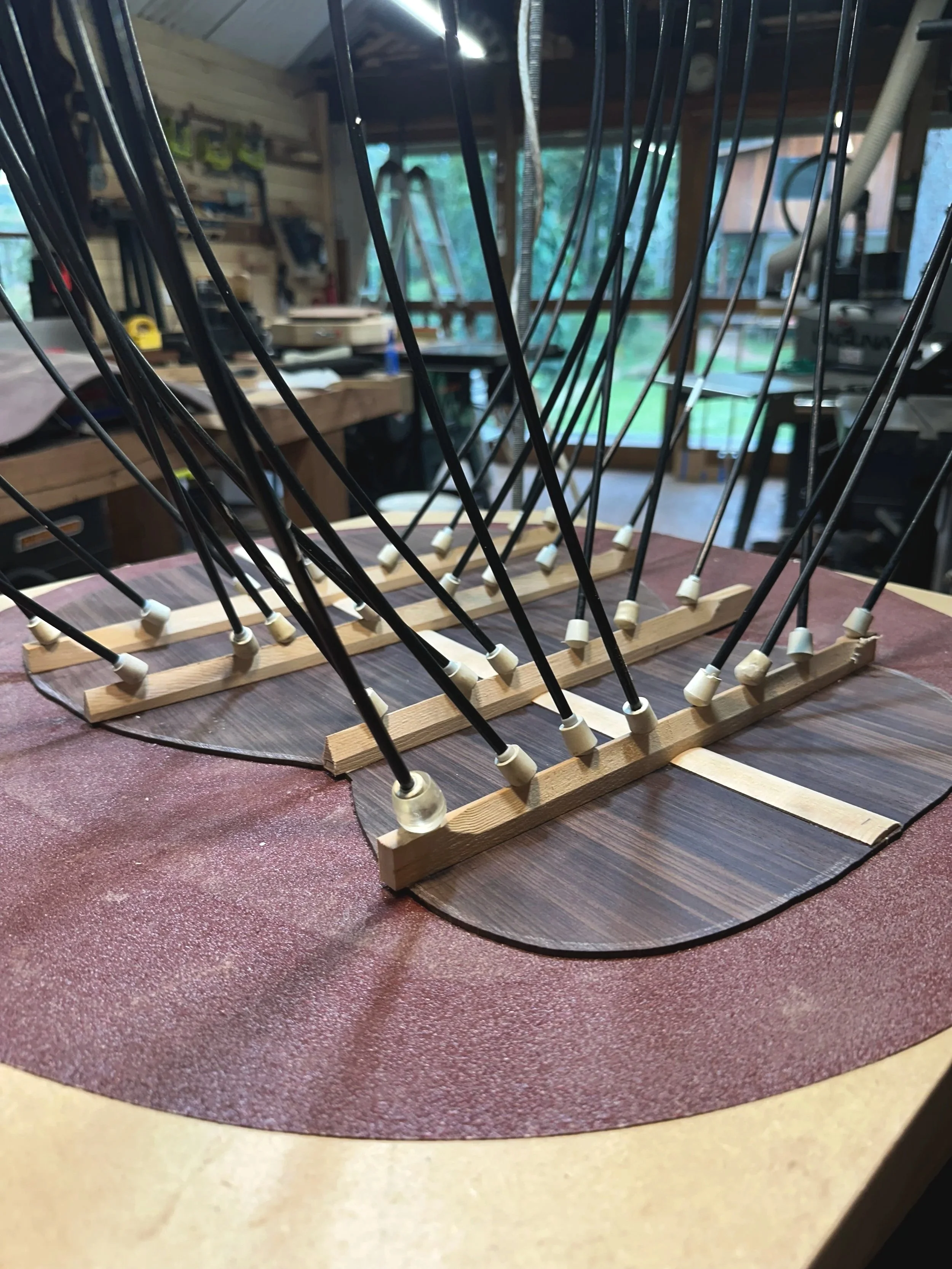
Handbuilding lets me work the wood to its unique stiffness and characteristics. Every piece of timber behaves differently: two tops that look identical can vibrate and respond in completely different ways. By shaving braces to match the top’s stiffness, adjusting brace geometry and thickness, and voicing the soundboard to complement that specific wood, I can tune balance, response, sustain and dynamic range. That kind of attention brings out the best in the timber — more clarity, richer overtones, better projection .
Setup matters just as much. String choice, saddle material and influence playability and tone; these are choices I tailor for you, not decisions left to a production line.
Aesthetics are part of the personal connection to the instrument. You get to choose wood combinations, bindings, inlays and finishes that reflect your taste, and I can alter the finish thickness and application method to affect both look and acoustic response. A french polish finish will let the top breathe and vibrate more freely than a heavy lacquer typically used in factory production.
Factories optimise for consistency, speed and cost. That’s great for accessibility and price, but it limits responsiveness to the individuality of the wood and the player. I’m not just assembling parts — my goal is to shape the sound and feel around you and the specific piece of timber. The result is an instrument that’s more responsive, more musical more personal.
My philosophy is to make the 100 ‑year guitar. In a century — and for many years beyond — the instrument should still be giving people joy. To achieve that, my guitars are built to be adjusted as they age so they continue to make music.
Key principles:
Long‑lasting materials and traditional construction methods that age gracefully rather than fail.
Designs that allow for straightforward maintenance, repair and setup adjustments over decades.
Component choices that can be replaced or upgraded without compromising the instrument’s character.
Attention to stability: neck designs, bracing and hardware chosen to tolerate environmental changes and repeated adjustments.
Finish and fit that wear in a musical way, not a destructive way — the guitar should mature, not degrade.
What that means for you:
A guitar that responds better with time when looked after, rather than becoming obsolete.
Easier access for luthiers now and in the future to service and re‑setup the instrument.
An instrument whose tonal qualities evolve naturally and remain playable across generations.
Build choices I emphasise:
Solid, seasoned tonewoods sourced for stability and tone.
Bolt on neck and reinforcement options that balance serviceability with resonance.
Solid top linings to cut down on energy lost to the guitar’s sides resulting in louder volume, clearer notes, and longer sustain, especially on the fundamental tones.
Quality hardware that can be maintained or swapped without invasive surgery.
Finishes that protect yet allow the wood to breathe and settle.
The goal is not merely a durable object, but an instrument that stays playable, serviceable and musically rewarding — a century on.
The Finish
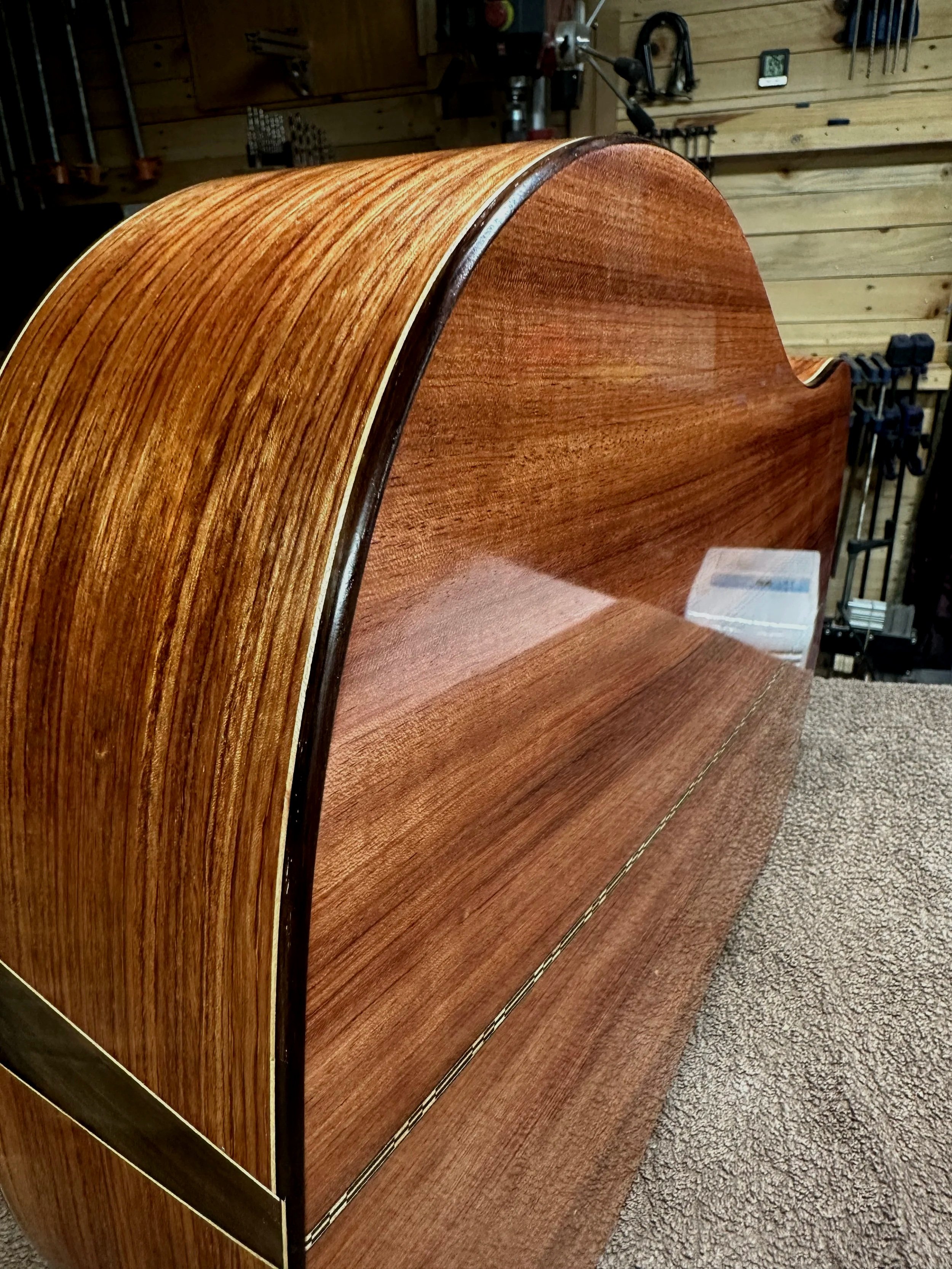
French polished finishes are widely regarded as the pinnacle for acoustic guitars — and for good reason.
Why French polish is considered the best
Tone clarity and responsiveness: Shellac is extremely thin and hard; it allows the wood to vibrate more freely than thicker, modern finishes. Players often report greater top resonance, faster transient response, and a more open, dynamic sound.
Natural feel: The finish is smooth and satiny, with a warm, tactile feel that most players prefer. It doesn’t sit on the surface the way some lacquer or polyurethane finishes do, so the instrument feels closer and more immediate in the hands.
Acoustic aesthetics: French polish enhances the natural depth and figure of timber without masking it. Grain and flame show through with a luminous, organic glow that complements high-quality tonewoods.
Repairability and longevity: Small scratches and wear can be sympathetically repaired by an experienced luthier without needing major refinishing. The finish ages gracefully, developing a pleasing patina that many players prize.
Weight and thinness: Because shellac layers are applied thinly, the finish adds minimal mass to the top and body, preserving the instrument’s acoustic properties.
Practical considerations
Maintenance: French-polished instruments require more careful maintenance than modern factory coatings. They are sensitive to heat, alcohol and some cleaning products; use a soft, dry or barely damp cloth and keep the guitar away from extreme temperature and humidity changes.
Durability: The finish is softer than modern polyurethanes, so it will pick up dings and dents more readily. Many players see this as part of the instrument’s character; others prefer a harder finish for heavy-duty gigging.
Cost and craft: French polishing is a labour-intensive, skilled craft. That craftsmanship is reflected in the price, but it’s also what preserves the tonal and visual benefits many musicians seek.
Conclusion For players who prioritise acoustic nuance, natural feel and the visual warmth of timber, a French-polished guitar remains the gold standard. If you’re after maximum projection, ease of maintenance and ruggedness, a modern finish might suit you better — but for pure acoustic beauty and responsiveness, few finishes match French polish.
and results.
Tonewoods
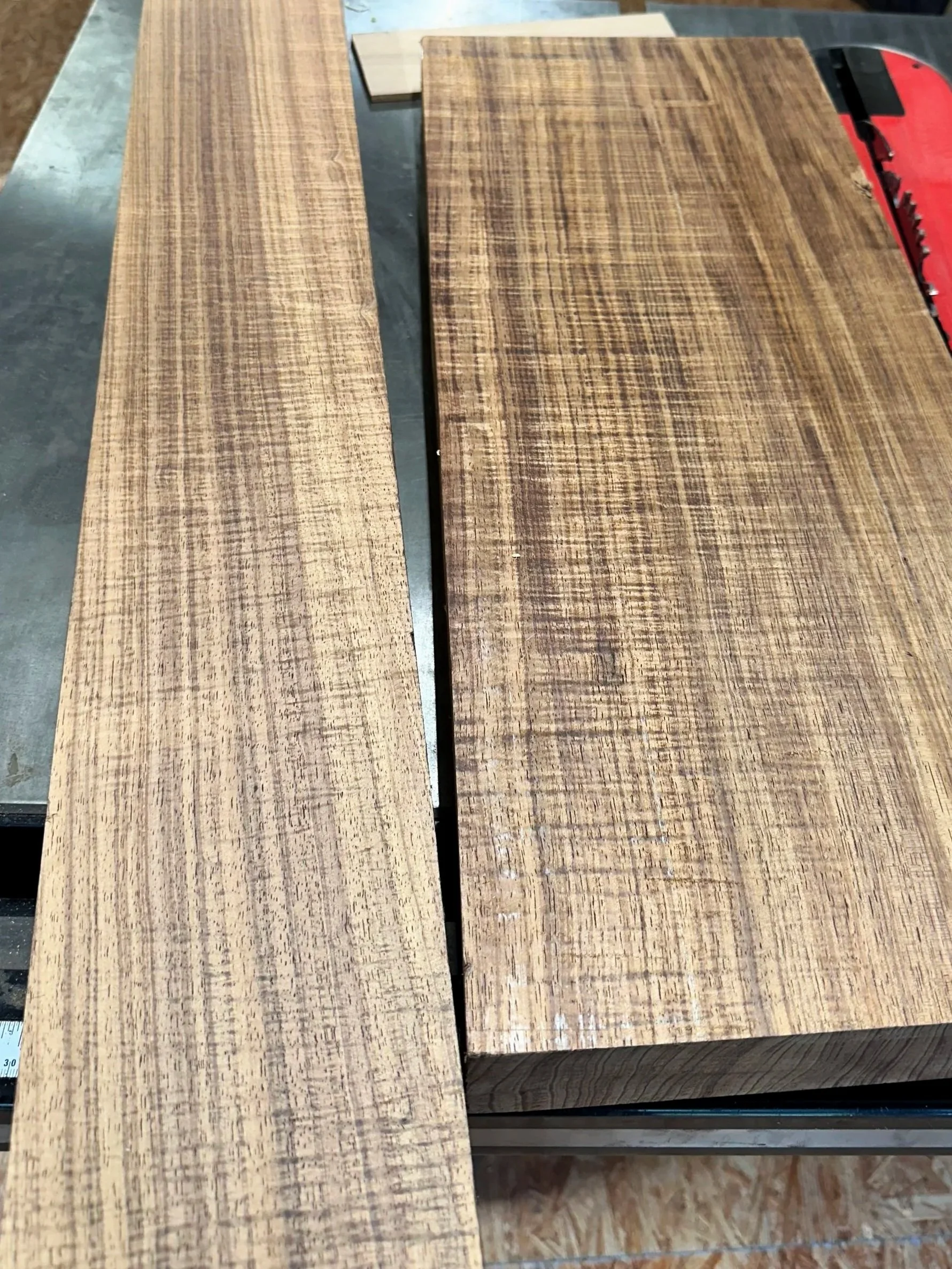
I use Australian woods where appropriate and sustainable tonewoods.
I choose local Australian timbers — like Tasmanian blackwood, Queensland maple, and bunya — whenever they suit the instrument’s voice and character. These species offer excellent tonal qualities and help reduce transportation impact. Where Australian woods aren’t the best match, I select responsibly sourced, certified sustainable tonewoods from trusted suppliers.
Sustainability practices I follow:
Prioritise reclaimed, salvaged or kiln-dried timber to reduce demand for fresh logging.
Use certified suppliers (FSC or equivalent) and check chain-of-custody documentation.
Design for efficiency to minimise waste; offcuts are reused for parts, repairs or small accessories.
Maintain small-batch production to avoid overproduction and preserve quality.
The result is instruments that celebrate Australian timber when it’s the right choice, while respecting forests and future generations through consistent, practical sustainability.
The Workshop
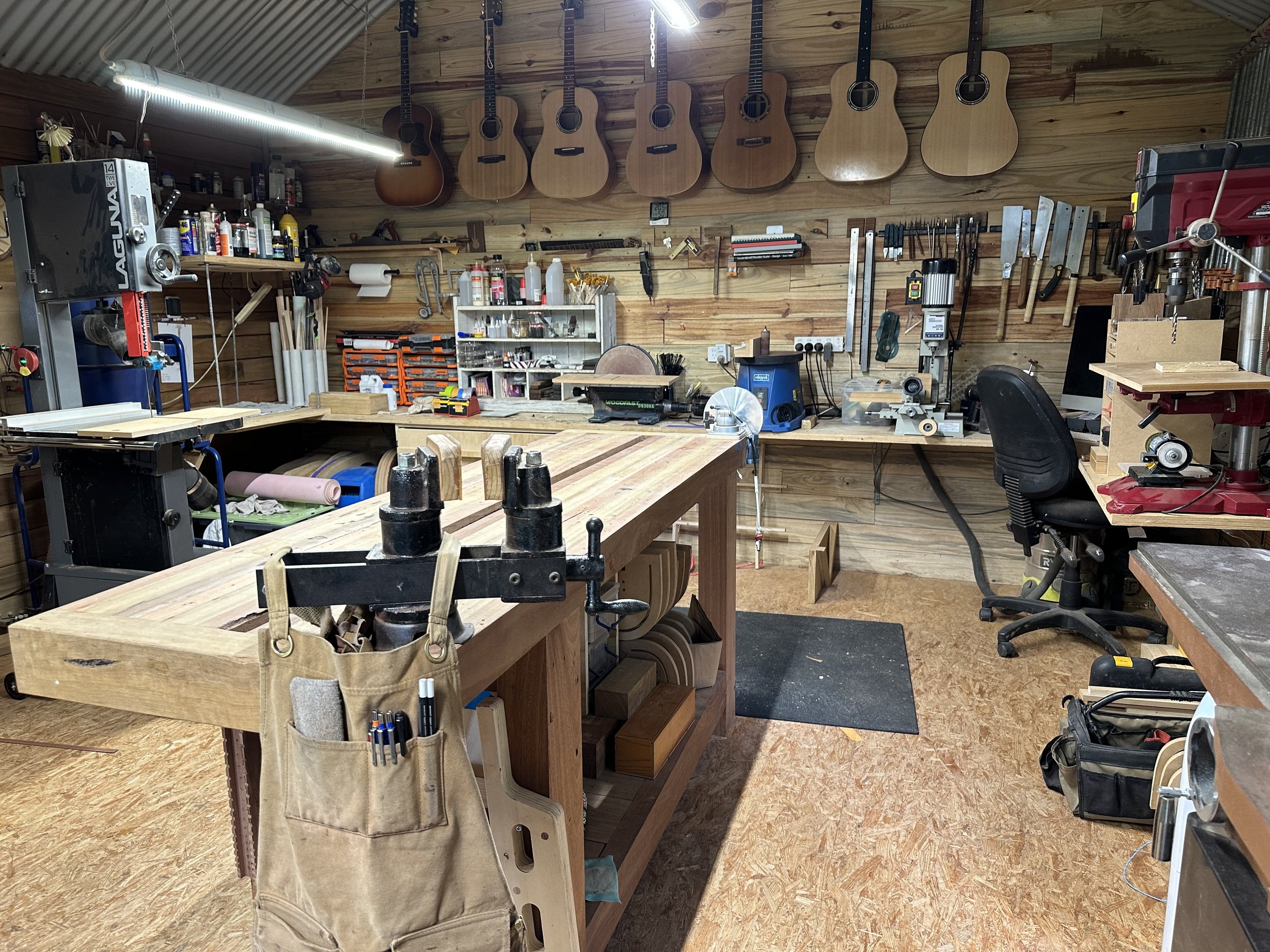
Every component — from soundboards and neck blanks to fingerboards and braces — is acclimatised in the controlled space before shaping and assembly. This means joins are tighter, glue bonds are more reliable and fretwork remains stable. The result is instruments that stay true to setup, require fewer adjustments down the track and retain their tonal character longer.
Maintaining correct humidity is a small but crucial step in our build process that protects your investment and helps deliver consistently excellent instruments.
Every component — from soundboards and neck blanks to fingerboards and braces — is acclimatised in the controlled space before shaping and assembly. This means joins are tighter, glue bonds are more reliable and fretwork remains stable. The result is instruments that stay true to setup, require fewer adjustments down the track and retain their tonal character longer.
Maintaining correct humidity is a small but crucial step in our build process that protects your investment and helps deliver consistently excellent instruments.